
Blue eggs attract attention with their colorful shell, often associated with breeds of chickens like the Araucana or the Cream Legbar. Their hue comes from a natural pigment, biliverdin, deposited during the formation of the shell in the oviduct. Nutritionally, the question deserves to be asked without shortcuts: does a blue egg really provide more than a brown or white egg?
Biliverdin and colored shells: what genetics really changes in the egg
The blue color of the shell results from a retroviral insertion in the genome of certain chicken lines. This genetic mechanism activates the production of biliverdin, a pigment derived from the breakdown of hemoglobin, which permeates the shell throughout its thickness.
This process does not affect the white or the yolk. Available analyses, including those compiled by the USDA in its review of egg composition according to breeds and farming systems, confirm that the color of the shell does not alter the nutritional profile of the egg. Proteins, lipids, fat-soluble vitamins (A, D, E): the contents remain comparable between blue, brown, and white eggs from similar farming conditions.
Biliverdin itself, although present in the shell, does not migrate to the consumed content. Its role remains structural and pigmentary. Attributing health benefits to this molecule in the food context is not supported by any data published in accessible nutritional literature.

Omega-3 and chicken feed: the true nutritional lever of blue eggs
If the blue egg is not intrinsically superior, it can sometimes be in practice. Breeds that lay blue eggs are often raised in extensive, free-range systems by farmers attentive to the quality of the feed. This farming context can result in a more interesting lipid profile, provided the hen’s diet is appropriate.
Here we find the benefits of blue eggs according to Kalinoe, which are more related to farming practices than to the genetics of the shell.
Recent trials, including those published in the journal Nutrients, show that hens fed diets enriched with flaxseed or rapeseed produce eggs whose yolk contains more omega-3 and less omega-6. This rebalancing of the omega-6/omega-3 ratio is discussed in the scientific literature for its potential anti-inflammatory effect and its relevance in cardio-metabolic prevention.
The link between hen feed and egg composition is direct. The lipids in the yolk faithfully reflect the diet consumed. A blue egg from a hen fed standard corn will not have a different lipid profile from a brown egg under the same conditions. The determining factor remains the hen’s diet, not the breed.
Nutrients to monitor in an enriched egg
- Omega-3 fatty acids, particularly alpha-linolenic acid (ALA) and to a lesser extent DHA, significantly increase with a flax-based diet.
- Choline, naturally present in the yolk, plays a role in liver metabolism and brain health, regardless of shell color.
- Lutein and zeaxanthin, two carotenoids in the yolk, also depend on the hen’s access to fresh plants or specific dietary supplements.
Labeling and commercial mentions: distinguishing marketing from actual quality
Since 2024, several European countries including France have strengthened or announced the strengthening of labeling on the farming methods and feed of laying hens. The stated goal is to reduce misleading mentions like “farm-raised” or “free-range” when the actual conditions do not match these terms.
This regulatory evolution directly concerns blue eggs. Their colored shell creates a spontaneous association with rustic and natural farming, which is not always verified. An industrial blue egg exists, and its nutritional value does not differ from that of a standard egg produced under the same conditions.
For the consumer, the code printed on the shell remains the most reliable reference. The number 0 corresponds to organic farming, 1 to free-range, 2 to barn-raised, and 3 to caged. The color of the shell does not appear in any official specifications as a criterion for nutritional quality.
What the label does not yet say
The available data do not allow us to conclude, at this stage, on the generalization of labeling mentioning omega-3 content or the type of feed given to hens. Some labels like Bleu-Blanc-Cœur already incorporate these criteria, but they remain minority on the market.
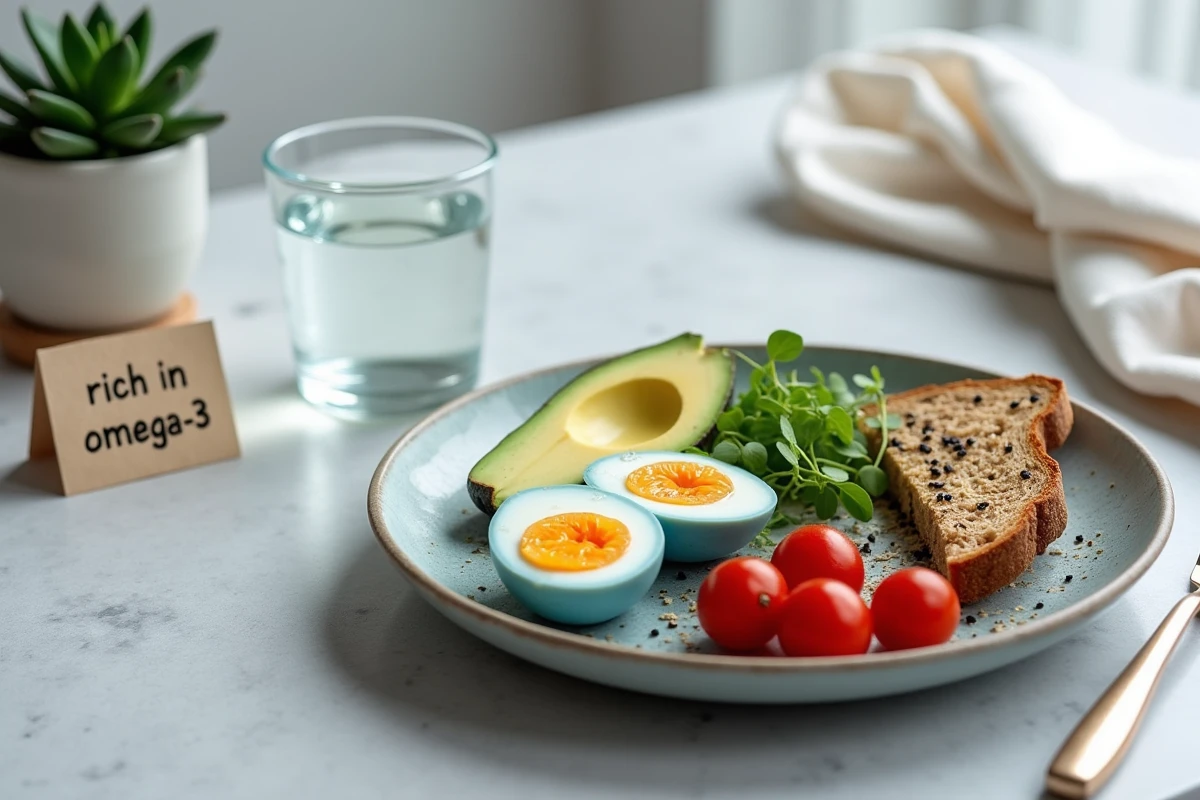
The mention “rich in omega-3” on an egg packaging implies a verified specification, with regular analyses of the lipid profile. Without this traceability, the promise remains declarative.
Cholesterol and egg consumption: current state of knowledge
The question of cholesterol comes up systematically when discussing eggs, blue or not. An egg contains a notable amount of dietary cholesterol, concentrated in the yolk. For decades, recommendations limited consumption to two or three eggs per week.
Scientific positions have evolved. Several recent meta-analyses suggest that dietary cholesterol has a limited impact on blood cholesterol in the majority of individuals. The response varies according to each person’s metabolic profile, making general recommendations imprecise.
For blue eggs enriched with omega-3, the question arises differently. The rebalancing of the omega-6/omega-3 ratio in the yolk could partially offset the cholesterol intake with an anti-inflammatory effect. Field feedback varies on this point, and long-term studies are lacking to establish a measurable net benefit.
- The cholesterol in the egg behaves differently in a healthy subject compared to a diabetic or dyslipidemic patient.
- The association between egg consumption and cardiovascular risk (stroke, heart attack) depends on the overall diet, not on the egg in isolation.
- Omega-3 enriched eggs do not replace a varied diet including fatty fish, nuts, and vegetable oils.
Choosing a blue egg for its health value implies checking what happens upstream: the hen’s diet, the farming method, any label. The colored shell, as appealing as it may be, is just an indicator of breed, not nutritional quality. A good egg is judged by what the hen has eaten, not by the color of its shell.