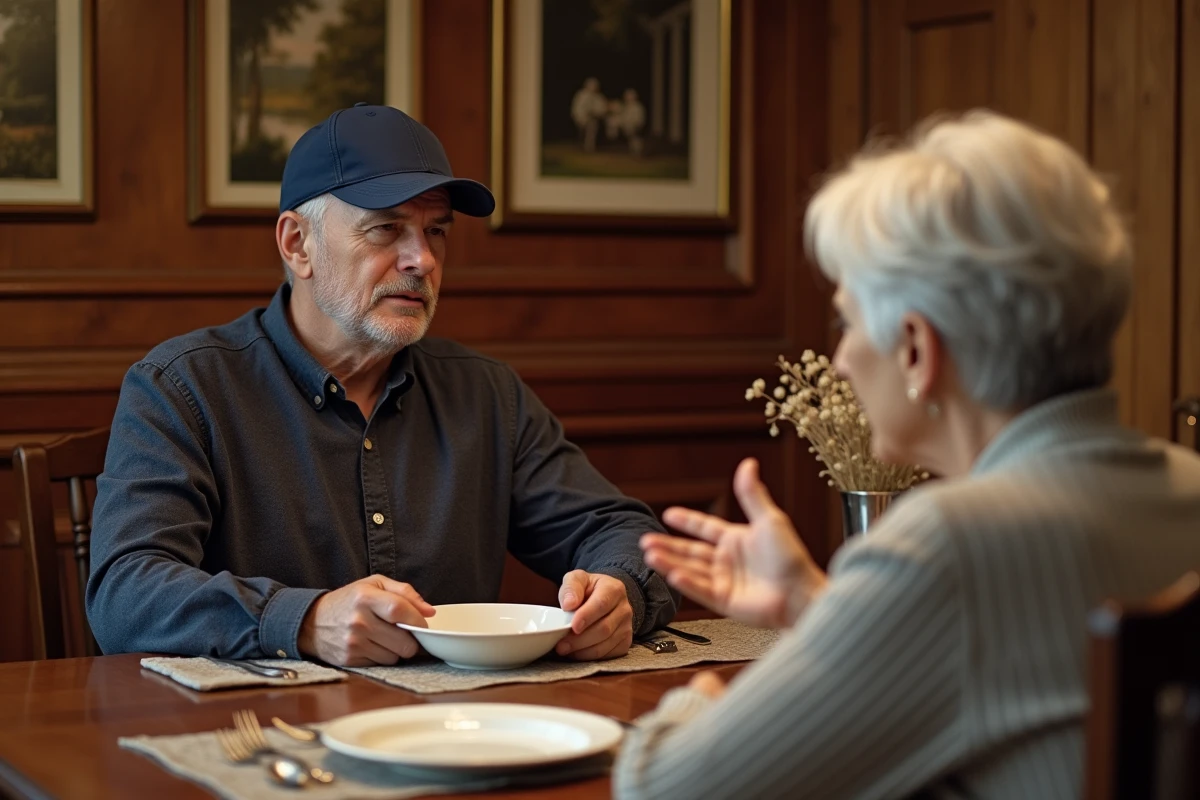
At a family meal or in a restaurant, keeping your cap on your head still provokes pointed looks. This collective reflex doesn’t come from nowhere: it is based on a mix of inherited social codes, perceptions of respect towards other diners, and conventions that vary according to the place and context.
Before deciding whether to take it off or keep it on, it’s better to understand what is really at stake around the table.
Cap at the table and visual discomfort: what other diners perceive
We don’t always think about it, but a cap with a visor alters the reading of the face. The visor casts a shadow over the upper part of the face, partially masks the gaze, and creates a visual barrier during the meal. For the person sitting opposite, the impression is of a partially hidden interlocutor.
In a somewhat dimly lit restaurant, the effect is amplified. The server coming to take the order, the diners around the plate: everyone perceives this slight discrepancy without necessarily verbalizing it. The problem is not the cap itself, it is the break in eye contact that it imposes during the meal.
This detail explains why discomfort is less pronounced with a beanie or beret, which do not cast a shadow over the eyes. The shape of a baseball cap, with its rigid visor, concentrates most of the criticism. This distinction is also found in contemporary etiquette guides, which tolerate women’s headwear integrated into the outfit (turban, stylish hat) more than a casually worn visor cap.
For those who want to delve deeper into the issue, the topic of eating with a cap at the table is as much about social perception as it is about formal rules.
Removing your cap in a restaurant: a code inherited from hats
The rule of uncovering indoors was not invented for the cap. It dates back to the time when the men’s hat was an everyday accessory. As noted in Sophie Fabre De La Ripelle’s book on table manners in France, men uncover themselves upon entering a private place, and this convention applied to hats, caps, and all headgear.
The code also distinguished between genders: women could keep their hats on during lunch or cocktails, but had to remove them for dinner. Men, on the other hand, were required to leave their headgear at the coat check. This asymmetry persists today in a diffuse manner: a beret worn by a woman at the table rarely elicits comment, while a baseball cap worn by a man attracts attention.
The gesture of removing one’s headgear upon entering a place expressed respect towards the host and the other people present. The same logic can be found in other table conventions:
- Not resting elbows on the table to show that one is not monopolizing communal space
- Placing the napkin on one’s lap rather than tucked into the collar, a sign of attentiveness to the world around
- Waiting for everyone to be served before starting to eat, a marker of respect for the group
Keeping your cap on at the table fits into this same framework: it is not an impolite act in itself, but a deviation from a code of collective respect around the meal.
Cap at the table according to context: fast food, fine dining, family meal
Applying the same rule everywhere makes no sense. Context changes everything, and feedback on this point varies according to generations and countries.
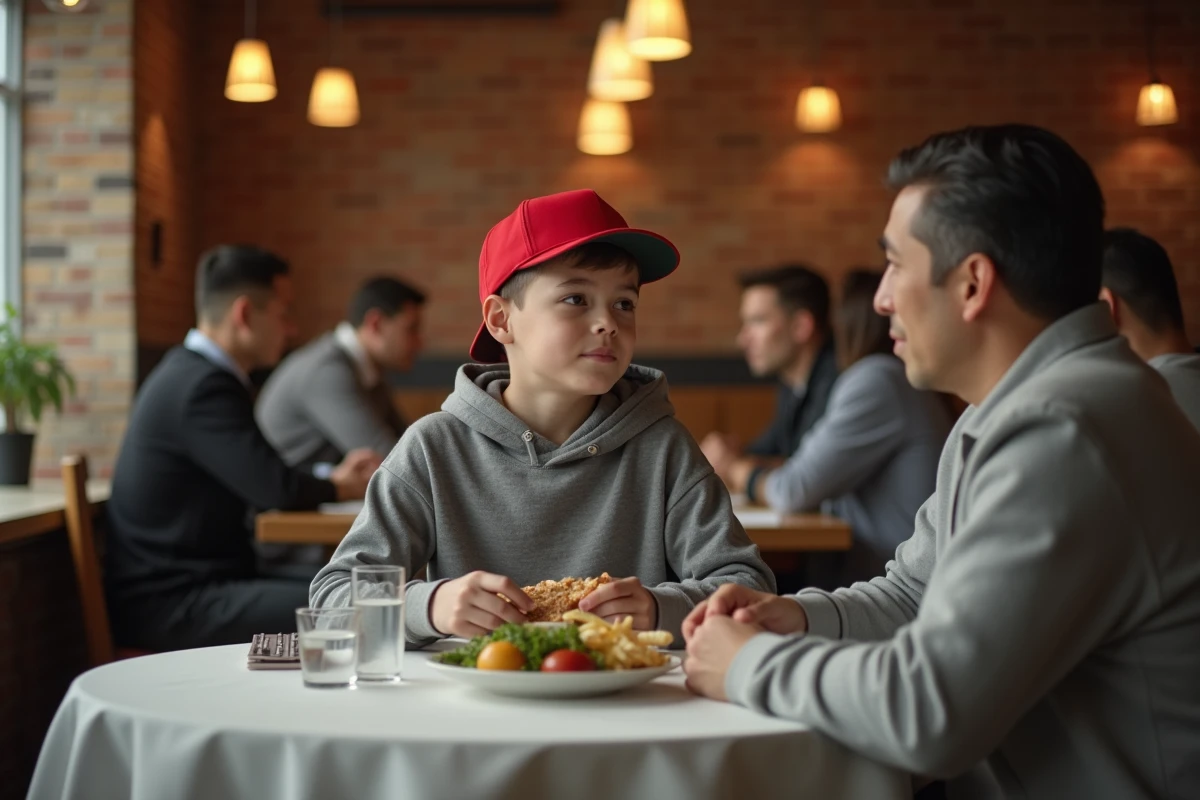
In a fast food place or cafeteria, the cap poses no real problem. The environment is informal, the meal is quick, and no one expects a particular protocol. In several English-speaking countries, this distinction between “casual” and “formal” now structures etiquette recommendations: the cap is tolerated in informal restaurants, but is poorly perceived in establishments with tablecloths and waitstaff.
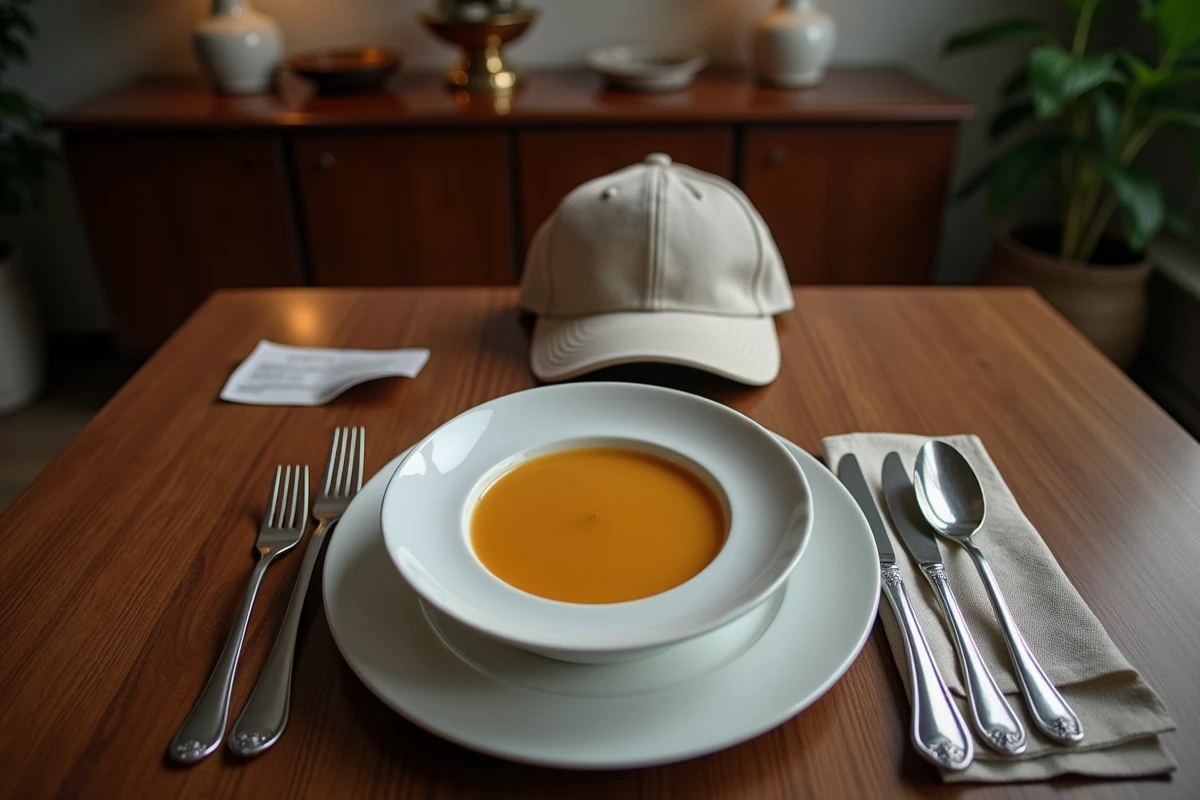
In fine dining, the situation changes. The dish is crafted, the service is attentive, the plate is set. Keeping a cap on in this context sends a signal of nonchalance, even if that is not the intention. The server, the other tables, the chef coming out to the dining area: the cap stands out.
At a family meal, the situation is more nuanced. In some households, no one says anything. In others, a grandparent will remind the rule without hesitation. The question is not so much about who is right, but about measuring the impact on the meal’s dynamics. Removing your cap is a gesture of a few seconds that avoids unnecessary friction with observing children and silently judging diners.
Medical and aesthetic reasons: when the cap stays on
A point often overlooked in discussions about table manners: the cap is not always a style choice. For people undergoing chemotherapy, suffering from alopecia, or having dermatological issues, the headgear serves a protective and comforting function.
Etiquette columnists have recommended for several years now to adopt a presumption of goodwill towards a cap kept on at the table. Rather than assuming a lack of respect, one should start from the premise that the person may have a valid reason for keeping it on.
This evolution also applies to headgear related to religious practice, which traditionally escapes the convention of “uncovering” indoors.
Practical tips for managing the cap at the table with children
With children, the cap at the table becomes an educational topic. It is difficult to explain to a child why they should remove their cap if we do not do it ourselves. Here are some practical guidelines:
- Propose a specific place to put the cap upon arrival (hook, bag, bench), so that the gesture becomes automatic
- Explain the rule through eye contact: “we look at each other when we eat together” works better than “it’s rude”
- Distinguish contexts with the child: picnic outdoors, the cap stays on; seated meal at home or in a restaurant, we take it off
Linking the rule to a concrete situation rather than an abstract prohibition facilitates learning. The child understands the “why” and replicates the gesture without every meal becoming a negotiation over food, napkin, elbows, and cap at the same time.
The cap at the table remains a social marker that evolves. In a world where table codes are simplifying, the gesture of removing it retains a clear function: signaling to other diners that one is fully present at the meal, face uncovered, gaze accessible. A discreet gesture that weighs more than one might think on the atmosphere around the plate.