
A whitish deposit that crumbles under the fingers, a coating that blisters at the base of the wall, a sharp smell of a poorly ventilated cellar: one recognizes saltpeter even before making a diagnosis. This potassium nitrate crystallizes when mineral-laden water migrates through the masonry and then evaporates at the surface. Treating saltpeter in a damp cellar means addressing the cause, not the visible symptom.
Anti-saltpeter paint in cellars: a finishing treatment, not a solution
Homeowners regularly apply a “salt-blocking” paint or coating directly on the affected wall. The result lasts a few months, sometimes a winter, before the efflorescences reappear beneath the finishing layer.
Since 2022, the Quality Construction Agency classifies these surface products as finishing treatments, not as treatments for the cause. In the presence of rising or lateral moisture, the water pressure in the wall continues its work. The anti-saltpeter paint eventually blisters, the coating peels off, and the process starts over.
In practice, these products have their place as a final layer, once the source of moisture has been eliminated. Applying them first is like repainting a wall that is taking in water: you mask the problem while the masonry deteriorates from within. When seeking to understand the treatment of saltpeter in a cellar, this distinction between finishing and structural treatment changes the entire approach to the project.
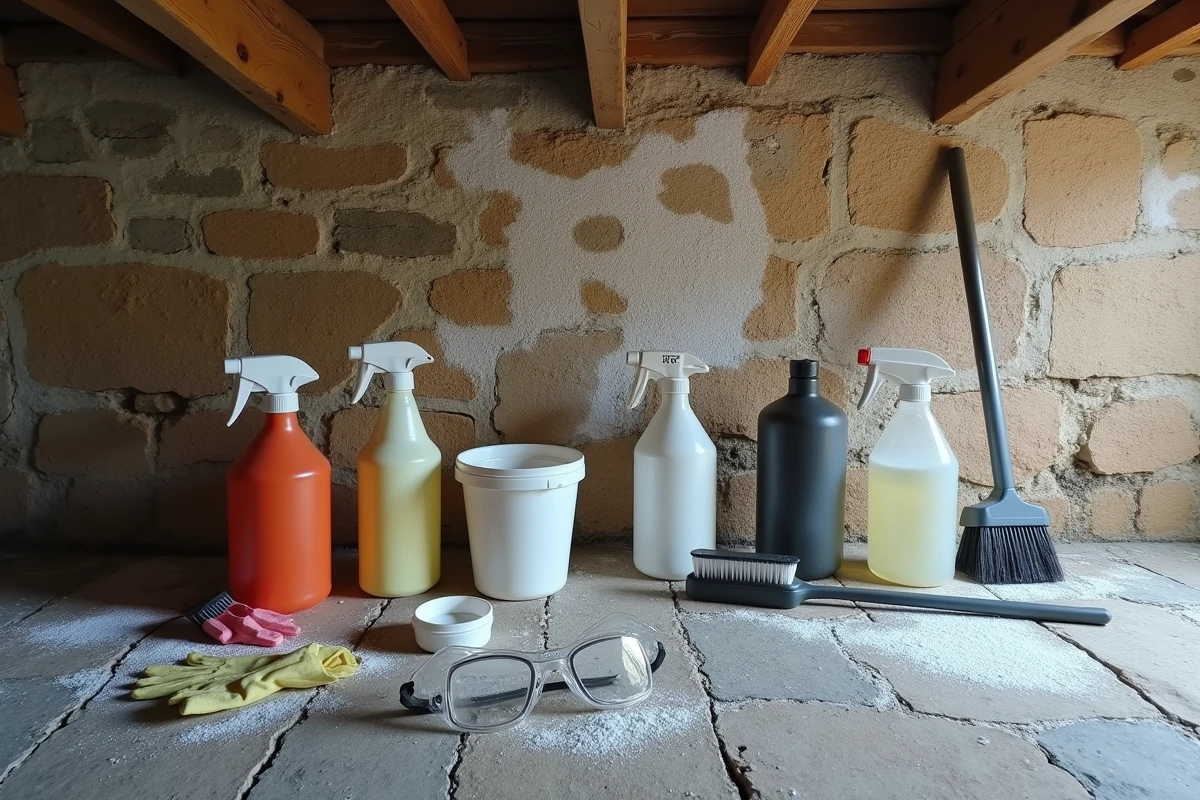
Identify the source of moisture before any saltpeter treatment
Saltpeter never appears without water. Before choosing a product or method, one must identify the mechanism at play. Three situations commonly arise in most cellars.
Capillary rise from the ground
Water from the ground rises through the walls by capillarity. This case is identified when the saltpeter traces concentrate at the bottom of the walls, often at a consistent height. Porous materials (stone, old brick, untreated concrete blocks) are the most exposed. The phenomenon worsens during high water table periods or after heavy rains.
Lateral infiltrations through buried walls
When the cellar is partially or fully buried, the hydrostatic pressure of the soil pushes water through the masonry. Wet areas are then observed at mid-height or across the entire surface of the wall facing the ground. Saltpeter spreads diffusely, sometimes accompanied by seepage.
Insufficient ventilation
Even with a small amount of water entering, a cellar without air circulation accumulates moisture. Evaporation slows down, and salts crystallize more easily. This aggravating factor often combines with the two previous ones.
A serious diagnosis involves measuring the moisture content in the wall (using a pin-type hygrometer or calcium carbide) and visually inspecting the exterior of the building if access allows.
Curative solutions based on the type of moisture in the cellar
Once the cause is identified, the appropriate treatment is chosen. Applying a waterproofing coating to a capillarity issue or injecting resin for lateral infiltration is a waste of time and money.
Resin injection against capillary rise
Holes are drilled at the base of the wall, spaced a few centimeters apart, and then a hydrophobic resin is injected to create a waterproof barrier in the masonry. The resin blocks the migration of water upward through the wall. This method works well on stone or brick walls, provided the substrate is relatively uniform. Feedback varies on this point when the masonry has voids or highly degraded joints.
Drainage and waterproofing for buried walls
In the face of lateral infiltrations, the most durable solution combines several interventions:
- An external peripheral drainage system with the installation of a drain and a drainage membrane to divert water before it reaches the wall
- An internal mineral waterproofing (water-repellent mortar applied in several layers) that forms a watertight box inside the cellar
- Treatment of singular points (wall/floor corners, pipe passages, cracks) where water always finds a way
Field feedback from specialized companies shows a clear trend to favor external intervention whenever access is possible. When excavation around the foundations is feasible, external drainage combined with waterproofing and mechanical protection yields the most durable results.
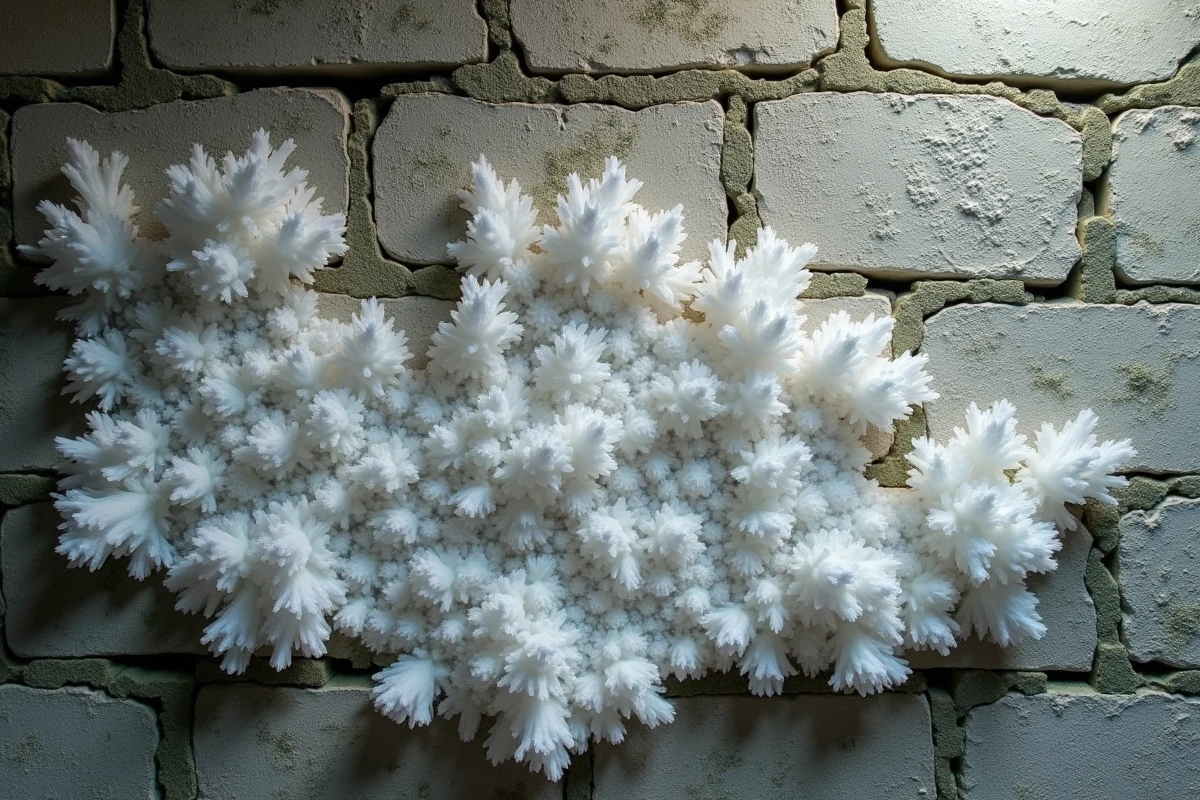
Improve cellar ventilation
Installing a suitable ventilation system for basements or simply creating air inlets and outlets speeds up evaporation and limits moisture stagnation. This is never a sufficient treatment on its own, but without proper ventilation, any curative treatment loses effectiveness.
Common mistakes in treating saltpeter in damp cellars
The same pitfalls frequently arise in cellar renovation projects. Here are some concrete traps to be aware of before starting work:
- Applying a waterproofing coating without brushing and cleaning the surface salts: adhesion will be poor, and the waterproofing will peel off
- Neglecting drying times between layers: each product (sealing mortar, water-repellent coating, epoxy resin) has a curing time that must be respected, or the treatment will fail
- Treating only the walls while forgetting the floor: if capillary rise also occurs through the slab, an anti-rising epoxy resin on the floor complements the system
- Confusing saltpeter with white mold: saltpeter is crystalline and dry to the touch, while mold is fluffy. The treatment is entirely different
The durability of an anti-saltpeter treatment depends as much on the preparation of the substrate and the treatment of singular points as on the product itself. A properly applied waterproofing on a well-prepared wall can last for decades. The same product applied to a poorly cleaned substrate may fail within a few years.
Saltpeter in a cellar is merely an indicator. As long as water flows freely through the masonry, the crystals will return. Precisely identifying the moisture mechanism, choosing the appropriate structural treatment, and only then applying the finishing layer: it is in this order that the problem is resolved sustainably.