
Bleach seeps everywhere, even where you least expect it. This product, formulated to disinfect our interiors, targets essential microorganisms in the soil and leaves behind toxic residues that persist for months. Far from stopping at the eradication of an unwanted weed, its action contaminates the land and groundwater for the long term. Local biodiversity suffers, well beyond the simple garden patch.
Regulations, particularly in France, strictly prohibit the use of bleach as an outdoor herbicide. Yet, the temptation remains in some private gardens. The damage, once done, extends well beyond the fences and disrupts the entire natural balance of the neighborhood.
Why bleach is not a suitable solution against nettles in the garden
Attacking nettles with bleach opens the door to real ecological and health disasters. The idea of a quick solution still appeals to a few diehards, but this chemical shortcut destroys much more than the targeted plant. Sodium hypochlorite, the key substance in bleach, does not discriminate: every living organism in the soil is swept away, including microfauna. The balances, meticulously built over the seasons, collapse.
The question of killing nettles with bleach according to Le Jardineur goes far beyond simple weeding. It raises our responsibility regarding the harmful effects of certain chemical products. Designed to eradicate microbes and bacteria, bleach releases polluting substances into the soil that seep deep and reach the groundwater. The fauna and flora of the entire area suffer the repercussions, often irreversibly.
Here’s what this seemingly simple action causes, with heavy consequences:
- Durable alteration of the soil: the very structure of the earth weakens, microbial life is decimated.
- Health risks: handling sodium hypochlorite exposes one to burns, irritations, and sometimes severe respiratory issues.
- Environmental impact: pollution sets in, local biodiversity declines.
Using bleach to weed betrays the neglect of the key role of natural cycles. Nettles, far from being mere intruders, contribute to soil regeneration and provide refuge for many beneficial insects. Opting for methods that respect life is choosing to maintain a garden full of vitality and balance.
Invisible consequences: how bleach disrupts soil balance and threatens biodiversity
Watering your garden with bleach is much more than eliminating a few bothersome nettles. Beneath the surface, a disruption occurs: sodium hypochlorite, the active ingredient, directly attacks soil microorganisms. These tiny workers decompose organic matter, nourish roots, and ensure fertility. Their disappearance jeopardizes the soil structure, making it poor, compact, and unable to retain water or nutrients.
This pollution knows no boundaries: it spreads via runoff, disseminating chemical residues to the groundwater. The water, now laden with toxic substances, seeps into surrounding soils and threatens wildlife, plant life, and even the local food chain. Beneficial insects, earthworms, and fungi: all see their habitat shrink, sometimes disappear.
Here are the main effects of this persistent pollution:
- Harmful effects on the food chain: by eliminating microorganisms, the entire ecosystem is weakened.
- Persistent toxicity: bleach residues continue to poison the soil and water in the long term.
Radical weeding thus hides a worrying reality: the garden soil, deprived of its underground life, becomes incapable of supporting any biodiversity. Instead of a fertile and thriving substrate, only a depleted support remains, deserted by life.
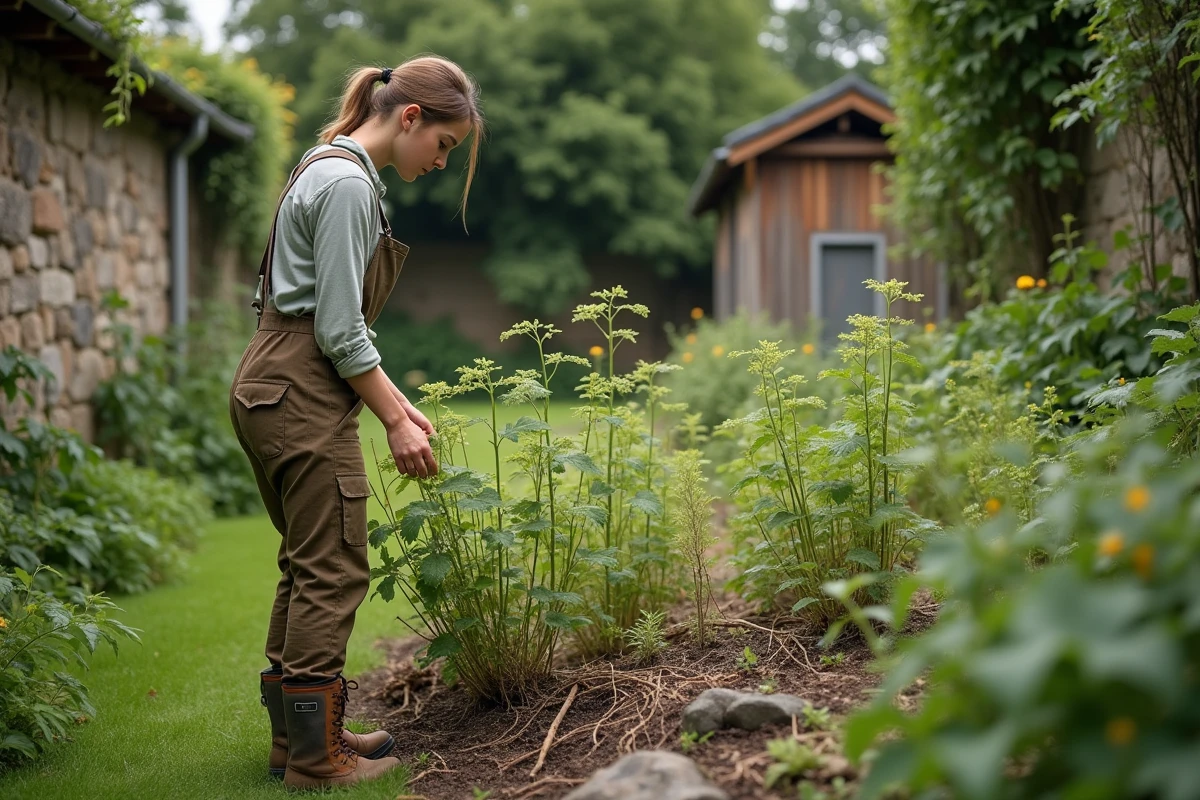
Ecological alternatives for managing nettles without harming your garden
There are other, far less destructive ways to control the presence of nettles. Natural solutions stand out for their simplicity and effectiveness, while preserving the richness of the soil.
Simple actions, lasting results
Here are some concrete methods that prioritize the preservation of life:
- Manual pulling, gloved to avoid stings, remains a reliable option. Waiting for the soil to be moist facilitates root extraction, limiting regrowth.
- Mulching with organic materials prevents light from reaching the nettles, slowing their growth. This nutrient-rich cover also protects the soil structure.
White vinegar, sometimes mentioned as an alternative, requires careful use. Less aggressive than bleach, it is still non-selective and can affect other plants. As for baking soda, it finds its place for occasional interventions, in small areas, without disrupting the entire ecosystem.
Finally, nettle manure changes the game: what was once thought to be a nuisance becomes an ally. Rich in nutrients, it strengthens plants and stimulates the natural resilience of the garden. It is better to integrate nettles into the balance of the vegetable garden than to systematically seek to eliminate them.
Choosing environmentally friendly methods is betting on fertility and sustainability while promoting the presence of essential auxiliaries. The garden is transformed, becoming both rich and resilient.
A living soil cannot be tamed with chemistry: it is in respecting its balances that it reveals all its strength, and nothing replaces the patience of the attentive gardener.