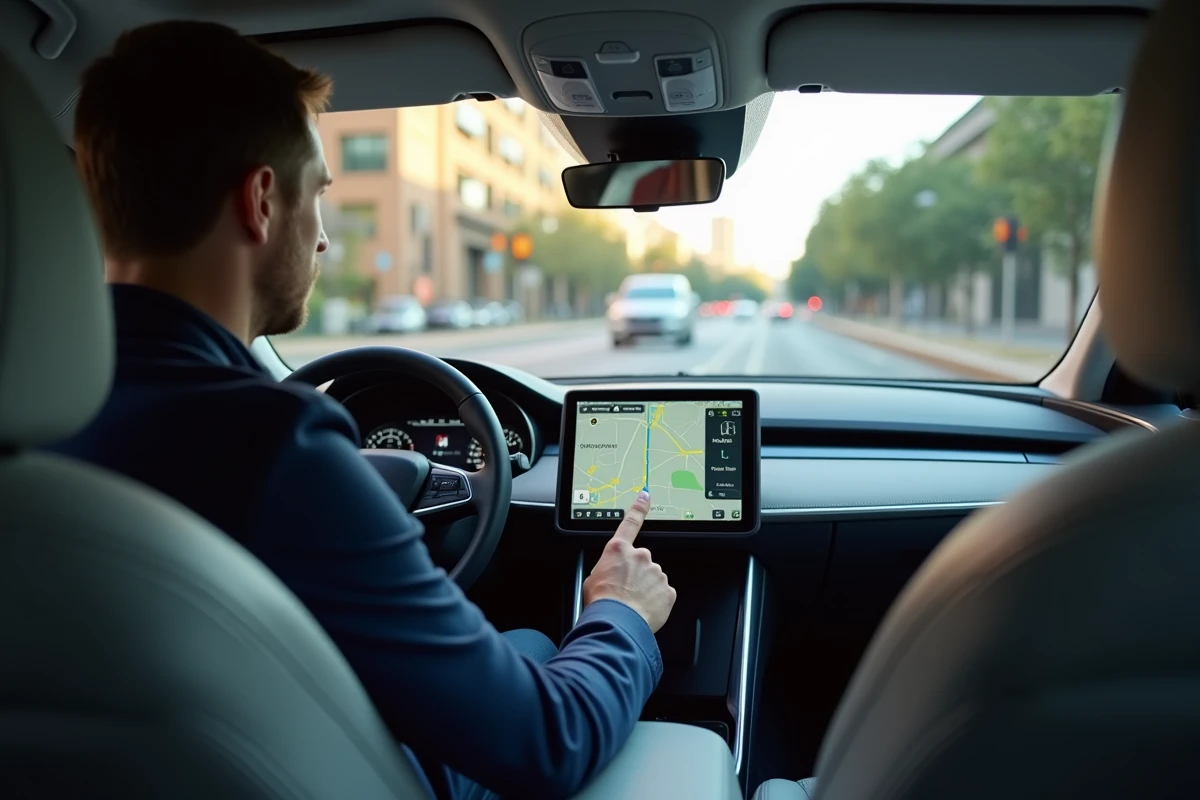
Waze remains one of the few navigation apps that offers a community reporting mode that can be utilized in real time. Displaying it on the vehicle’s screen rather than on the phone placed on the dashboard radically changes the readability of the route, the responsiveness to alerts, and driving safety. However, one must master the projection protocol suitable for your embedded system.
Waze Projection Protocol: What the Car Radio Firmware Actually Requires
The projection of Waze on the screen depends on the protocol negotiated between the phone and the vehicle’s head unit. Android Auto, CarPlay, and MirrorLink do not use the same video channel or tactile interaction mode. This technical distinction affects the smoothness of the display, the latency of the touch response, and the functions accessible while driving.
Android Auto transmits a compressed H.264 stream to the screen, with touch control returned to the phone. CarPlay operates on a similar principle, but Apple requires a receiver-side rendering for third-party navigation apps like Waze, which explains slightly different map loading times from one system to another.
Drivers often accuse Waze of “lagging” when the bottleneck is actually in the car radio firmware. An embedded system whose software has not been updated since the vehicle was delivered may refuse certain recent versions of Waze or Android Auto.
Checking the firmware version via the “About” or “System” menu on the central screen before attempting to connect can save hours of unnecessary diagnostics.
Among the methods to activate Waze on the car screen, the choice of USB cable also has a direct impact: a low-quality charging cable without data lines will prevent any projection, regardless of the protocol.
Waze via Android Auto: Critical Settings and Driving Restrictions
Since version 11 of Android Auto, Google has tightened interaction restrictions while driving. Text input for searching a destination is blocked beyond a certain speed. Only voice commands (“OK Google, navigate to…”) and selection from favorites or recent destinations remain accessible.
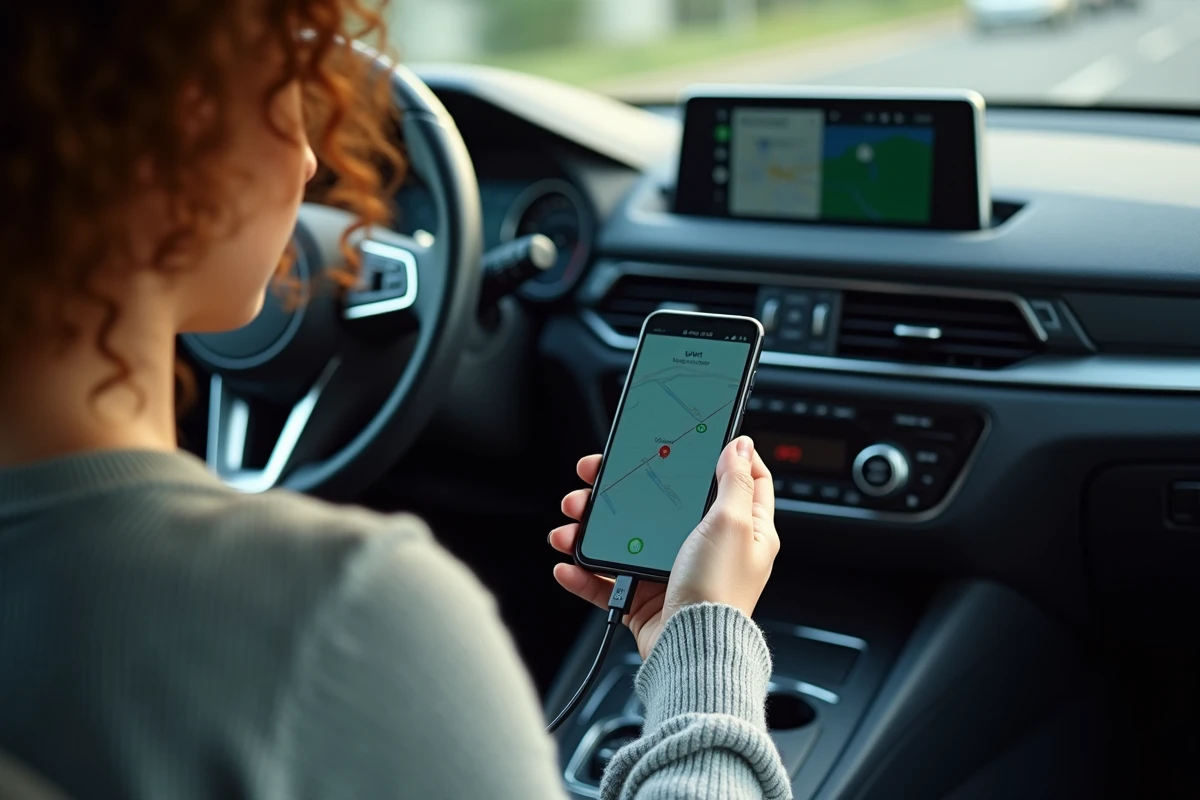
For Waze to appear in the Android Auto launcher on the vehicle’s screen, three conditions must be met simultaneously:
- Waze must be installed and up to date on the smartphone, with location permissions set to “Always allow” or “While using the app.”
- Android Auto must be enabled in the phone’s settings (on recent versions of Android, the setting is found in Settings > Connected devices > Connection preferences).
- The USB cable must support data transfer (USB-IF certification), or the wireless connection must be established via 5 GHz Wi-Fi if the vehicle supports it.
Waze does not appear in the vehicle’s Play Store: this is normal. The store integrated into Android Auto only lists applications that are already installed on the phone and compatible with the protocol. It does not allow the installation of an app directly from the central screen.
A often overlooked point: the language setting. If the Waze interface is configured in a different language than that of Android Auto, some vehicles may display character encoding conflicts in street names. Synchronizing the language of the app, the Android system, and Android Auto to the same regional setting eliminates this issue.
Waze on Wired and Wireless CarPlay: Differences by Model Year
Wireless CarPlay has become available in an increasing number of new vehicles since the 2024 model year, particularly in BMW, Mercedes, and VW, whereas equivalent 2020-2022 models from these same manufacturers often only offered wired connections. This evolution changes the game for iPhone users who want to launch Waze without plugging in a cable for each trip.
In wired mode, the connection goes from the iPhone’s Lightning or USB-C port to the vehicle’s designated USB port. The classic mistake is to plug the phone into a USB port reserved for charging (often indicated by a lightning bolt icon without a data symbol). The CarPlay-compatible port is usually identified by a smartphone icon or the mention “CarPlay” in the vehicle’s documentation.
In wireless mode, the initial pairing is done via Bluetooth, then the stream automatically switches to Wi-Fi. If the vehicle’s Bluetooth is already saturated with other paired devices (passenger phones, secondary hands-free kits), the wireless CarPlay connection may fail silently. Removing unused Bluetooth devices from the vehicle’s menu resolves most of these cases.
Vehicles Without Android Auto or CarPlay: Alternatives and Limitations
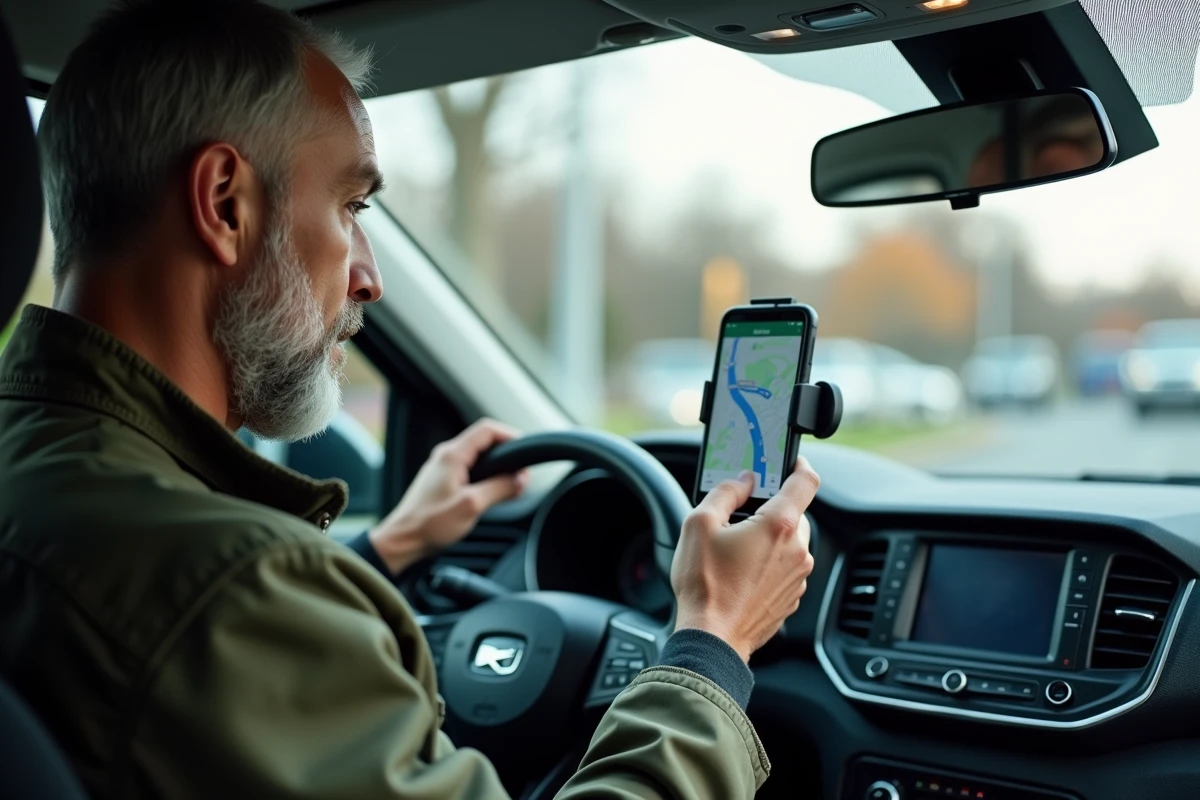
Some vehicles do not offer either Android Auto or CarPlay, either because the model predates their widespread adoption or by the manufacturer’s choice. This is the case with Tesla, which officially does not integrate either of these two protocols.
Several brands that relied on proprietary protocols (MirrorLink, EasyLink, SmartLink) have begun to roll out Android Auto and CarPlay through OTA updates or at dealerships during 2024-2025. If your vehicle is part of these intermediate generations, a visit to the dealership to check for the availability of a software update may be enough to unlock Waze on the screen.
For vehicles that are definitively incompatible, adapter boxes exist (such as CarlinKit, AAWireless). These boxes plug into the car radio’s USB port and emulate an Android Auto or CarPlay protocol. Results vary by model: noticeable touch latency, occasional restarts, degraded display quality on screens with a resolution lower than 800 x 480 pixels.
- Wired boxes: stable connection, lower latency, but add an extra cable in the cabin.
- Wireless boxes: more convenient for daily use, but consume more battery on the phone and require a longer initial pairing time.
- Screen mirroring via HDMI or Miracast: last resort solution, without touch interaction on the vehicle’s screen (navigation only from the phone).
Regardless of the method chosen, the determining factor remains the compatibility between the version of Waze, the phone’s operating system, and the firmware of the head unit. Updating these three elements before attempting the connection avoids the vast majority of projection failures.