
Smartly occupying oneself at home is not just about making a list of activities. The question revolves around the type of engagement that generates a lasting benefit, whether physical or mental, rather than merely filling time.
Recent French recommendations provide a measurable framework: about 30 minutes of dynamic physical activity per day, regular interruptions of sitting periods, and progression adapted to each individual’s level. These benchmarks allow for the classification of domestic activities according to their actual impact on the body and mind.
Home Activities: Comparing Their Real Impact on Sedentariness
Public health recommendations recognize housework, DIY, and gardening as legitimate forms of physical activity. However, not all domestic occupations are equal.
| Type of Activity | Physical Demand | Cognitive Stimulation | Risk of Prolonged Sedentariness |
|---|---|---|---|
| Gardening, DIY | High | Medium to High | Low |
| Active housework (vacuuming, windows, floors) | Medium to High | Low | Low |
| Cooking, baking | Low to Medium | High | Medium |
| Board games, puzzles | Very Low | High | High |
| Reading, video streaming | None | Variable | Very High |
| Bodyweight exercises, dancing | High | Medium | None |
This table highlights a gap often overlooked: the most popular activities when bored (watching a series, scrolling, playing a video game) are also those that worsen sedentariness. In contrast, DIY or gardening combines physical effort and problem-solving, making them dual-benefit occupations.
To delve deeper into this topic, several methods and tips on Heya help structure free time around activities that truly matter.

Adjusting Your Level Before Choosing an Activity at Home
Health professionals recommend evaluating three parameters before embarking on a new physical or creative occupation: the time spent sitting daily, sports history, and any existing pain. Ignoring this step often leads to abandonment after a few days.
Why Progression Matters More Than Motivation
Gradually increasing duration or intensity limits injuries and abandonment. Starting with a ten-minute dance session in your living room and then extending the duration each week yields more lasting results than an ambitious program followed for three days.
The same principle applies to cognitive activities. Learning guitar online or taking a drawing class requires a calibrated increase in difficulty. A project that is too easy generates the same boredom as inactivity. An overly ambitious project causes frustration.
- Assess your starting point: how many hours a day do you remain seated without interruption, and what type of effort is accessible to you without pain?
- Set a modest weekly goal: a new recipe, two active walking sessions in the garden, a chapter of a technical book.
- Vary the activities: alternate a physical activity (active housework, exercises) with a cognitive activity (reading, online learning, family board games) to maintain engagement.
This alternation between physical effort and mental stimulation corresponds precisely to what recommendations describe as an anti-sedentariness strategy integrated into daily life.
Often Overlooked Free Resources for Staying Occupied at Home
French libraries and media libraries have significantly expanded their offerings. Their catalog now goes beyond books: lending games, DVDs, vinyl records, musical instruments, access to digitized collections, creative workshops, and lectures. Home lending has become free in many of these establishments.
This resource remains underutilized by those looking for ways to occupy their time at home. Borrowing an instrument to test musical practice before investing, or accessing an online course platform through your media library, transforms the home into a cost-free learning space.
Children and Family Activities: A Lever for Engagement
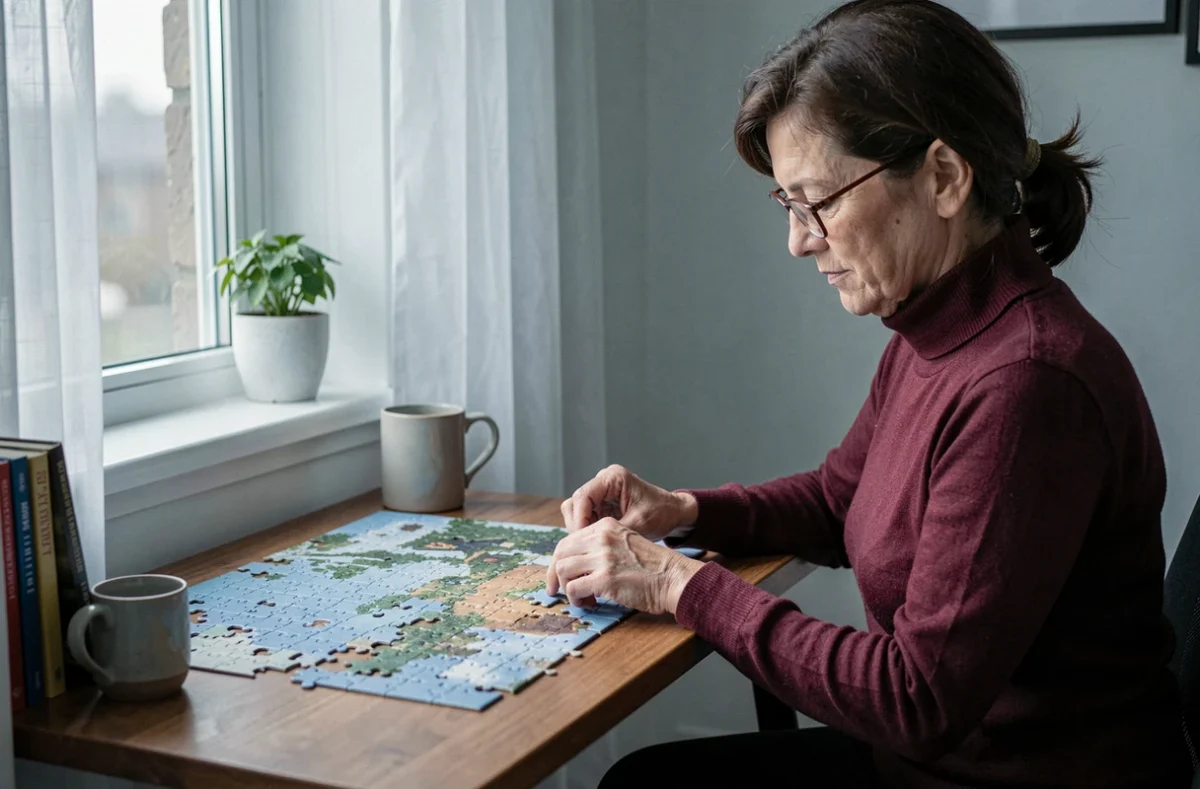
Offering board games borrowed from the media library allows for regularly renewing family activity ideas without accumulating materials. Creative workshops (origami, painting, construction) keep children occupied while involving adults in a common project.
A shared project among friends or family reduces the feeling of boredom much more than a solitary passive activity. Organizing a cooking workshop together, starting an online book club, or planning a home game tournament creates a social dynamic even without leaving home.
The Trap of Infinite Lists of Ideas to Never Be Bored
Lists of fifty activities without sorting criteria pose a concrete problem: they give the illusion of choice without providing a method for decision-making. The issue is not a lack of ideas, but the absence of a filter.
Two filters are enough to decide in a few minutes:
- Does this activity make me move or use my hands, or is it purely passive (screen, scroll)?
- Does it produce a visible or measurable result at the end (a dish, a repaired object, a chapter read, a mastered exercise)?
- Can I share it with someone (in person or online) to add a social dimension?
If the activity meets at least two of these three criteria, it has a good chance of generating real satisfaction. One well-chosen activity based on these filters produces more results than an entire list skimmed through without commitment.
Public health data confirms this approach: interrupting sitting periods with short sequences of walking, housework, or DIY produces measurable benefits, even without engaging in structured sports. The home then becomes a space for physical and intellectual activity, provided that one treats engagement as a deliberate choice rather than a reflex against boredom.