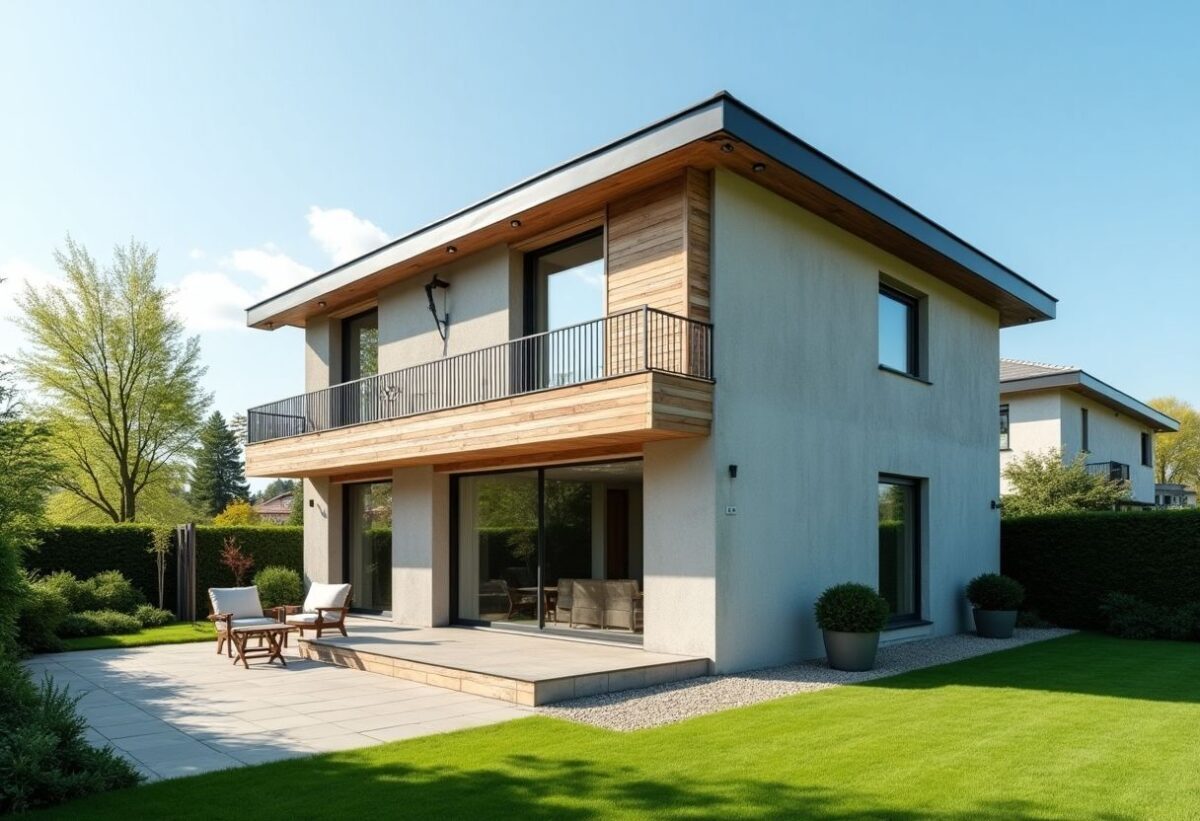
In a world where environmental concerns are becoming increasingly important, solutions for a more sustainable and energy-efficient habitat are essential. One of the techniques that stands out as an effective response to these challenges is external insulation. This method significantly reduces thermal losses, improves indoor comfort, and increases the property value of buildings. External insulation has many advantages that deserve to be explored to understand why it is favored by building professionals and homeowners concerned about their ecological footprint.
The advantages of external insulation
One of the main benefits of external insulation lies in its ability to provide continuous thermal coverage across the entire facade of the building. This helps eliminate thermal bridges that are often responsible for significant energy losses.
- Improvement of energy efficiency: This technique ensures better thermal protection of the building, leading to a significant reduction in heating and cooling needs. The savings on energy bills can be substantial.
- Preservation of interior space: Unlike internal insulation, this method does not affect the living space. This can be particularly advantageous for small homes where every square meter counts.
- Aesthetic and facade protection: It also allows for renewing the exterior appearance of the building while protecting it from the elements and climate variations.
Different techniques for external insulation
There are several methods for implementing external insulation, each with its own specificities and advantages. The choice of technique will depend on various factors such as the type of building, the available budget, and aesthetic preferences.
- Insulating coatings: These are applied directly to the facade, providing both effective insulation and a customized aesthetic finish. These coatings offer durable protection against the elements.
- Insulating panels under cladding: This solution involves the installation of rigid insulating panels, often made of polystyrene or mineral wool, covered by cladding. This is a commonly preferred solution for its robustness and ability to offer a variety of aesthetic finishes.
- External thermal insulation (ITE) under facing: The facing consists of a set made up of an insulator and a cladding, prefabricated in the factory, which is directly fixed to the exterior wall of the building. This technique is quick to implement and guarantees a quality finish.
Economic and environmental considerations
Choosing external insulation represents a significant but profitable long-term investment. The energy savings often allow for the initial cost of the operation to be amortized within a reasonable timeframe.
The environmental aspect is also worth highlighting. By reducing energy needs, this method helps decrease the building’s carbon footprint.
The choice of ecological insulators, such as wood fiber or hemp, enhances this positive impact on the environment.
Challenges and technical considerations
Even though the advantages of external insulation are numerous, it is not without technical challenges.
Implementation must be carried out by qualified professionals to ensure the effectiveness of the insulation and the durability of the facade.
Compliance with local urban planning regulations is imperative, as certain facade modifications may require prior approvals.
The choice of materials and techniques must also take into account the local climate and the specific characteristics of the building to ensure optimal performance.