
The non-invasive body contouring market has developed around two distinct product categories: shapewear (sculpting garments) and electromagnetic stimulation devices used in clinics. Both categories use the same marketing language—sculpted contours—but their mechanisms and supporting evidence have nothing in common.
Since November 8, 2024, France’s law of June 9, 2023, regulating commercial influence has prohibited the promotion of certain aesthetic techniques that may pose a health risk and requires edited images that slim or enlarge the figure to be labeled. This regulatory context is changing how these claims reach consumers.
HIFEM devices and sculpting garments: two promises, two levels of evidence
A compression garment visually redistributes volume around the stomach, waist, and hips. The effect is mechanical and immediate: the garment smooths the outline under clothing and can improve perceived posture, but the effect disappears as soon as it is taken off. It does not change body composition.
HIFEM (High-Intensity Focused Electromagnetic) devices, offered in clinics under various brand names, claim to go further. They trigger supramaximal muscle contractions to tone muscles and, according to some manufacturers, reduce the thickness of adjacent fat.
However, a systematic review published in 2024 in Aesthetic Plastic Surgery (Kohan et al.) reports limited average changes in abdominal fat and muscle thickness. Two of the included studies found only marginal benefits, or none at all. The review also notes inconsistencies in measurement methods and the influence of industry-funded studies.
The reviews of the Bodysculptor from Histoires de Filles bring together feedback from several users that illustrates the gap between marketing claims and tangible results, and let you compare testimonials before committing to a course of treatment.
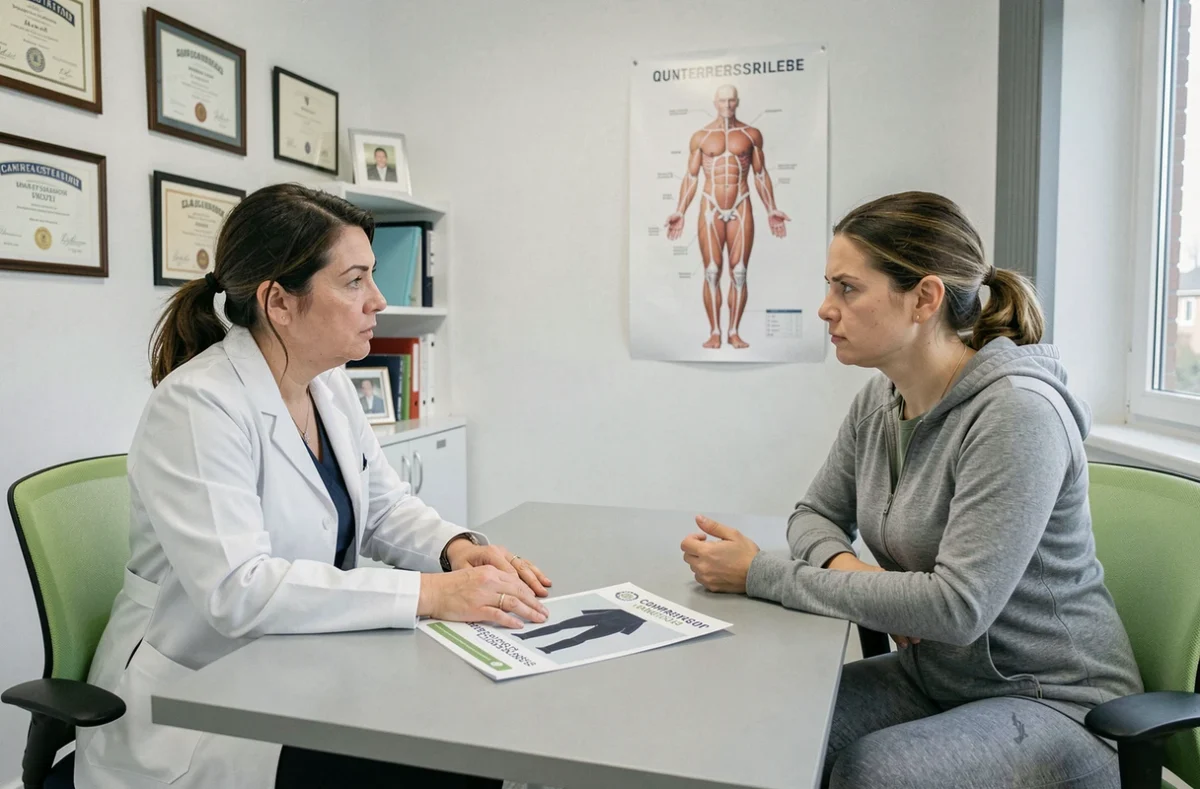
Temporary contouring or lasting change in body composition: how to tell the difference
The most common misconception is to interpret a smaller waist measurement taken immediately after a session as fat loss. A slimmer contour after a treatment may simply result from reduced tissue swelling, less water retention, or residual muscle contraction. These effects fade within a few days.
A lasting change requires a measurable shift in the fat-to-muscle ratio over several weeks. To check this, ask for specific evidence before paying for a course of treatment:
- Measurements using bioelectrical impedance or an ultrasound assessment of skinfold thickness, taken before the first session and at least four weeks after the last one by a practitioner independent of the clinic.
- The exact technology used by the device and its authorized regulatory indication: some approvals cover only muscle tone, while others relate to lipolysis or circumference reduction. The authorized indication does not always cover the claim displayed in the clinic window.
- The maintenance plan after the initial course, since, as Dr. Patrick Bacquaert, sports physician and chief medical officer of the IRBMS, points out, acquired muscle contractility is lost if it is not maintained.
If the clinic offers no objective before-and-after measurements or refuses to specify the device’s authorized regulatory indication, consider it a red flag.
Everyday shapewear: what compression does and does not do to the body
Textile shapewear works through graduated compression. Modern materials (microfiber, elastane, and cotton blends) are more flexible than the rigid girdles of the past, and the smoothing effect under clothing is real but purely cosmetic. No studies show that prolonged wear changes fat distribution or muscle mass.
Daily wear also raises health concerns. Excessive compression around the abdomen can interfere with digestion and restrict breathing. Dermatologists also report skin irritation caused by friction and trapped moisture, especially in hot weather.

Used sensibly, shapewear is a temporary styling aid. Treating it as a substitute for physical activity or a way to permanently reshape the figure is a myth.
Device results versus garment results: a comparison table
| Criterion | Sculpting garment | In-clinic HIFEM device |
|---|---|---|
| Mechanism | External mechanical compression | Supramaximal muscle contractions |
| Immediate effect | Visible smoothing under clothing | Temporarily slimmer contour after a session |
| Proven lasting effect | None on body composition | Measurable but modest gains according to the 2024 review by Kohan et al. |
| Identified risks | Skin irritation, digestive discomfort if too tight | Few serious side effects reported; limited long-term data |
| Regulatory framework | Standard textile regulations | Authorization depends on the indication (muscle tone, lipolysis, circumference reduction) |
Online promotion and body sculpting: what French law has required since 2024
France’s law of June 9, 2023, as in force since November 8, 2024, has tightened the rules for influencers. Promoting aesthetic techniques that may pose a health risk is prohibited on social media. Images edited to alter the figure must carry an explicit label.
This framework applies both to body sculpting devices and to shapewear promoted with edited before-and-after photos. Consumers who see a dramatic result on Instagram now have the right to know whether the image has been altered. In practice, enforcement remains uneven, but the burden of proof rests with the person promoting the content.
This legislative change does not solve everything. However, it makes it riskier for brands and clinics to advertise exaggerated results without factual support. Before committing to a treatment plan, check the device’s specific indication, insist on objective measurements, and remember that documented gains remain modest. These are the best ways to protect yourself against disproportionate claims.