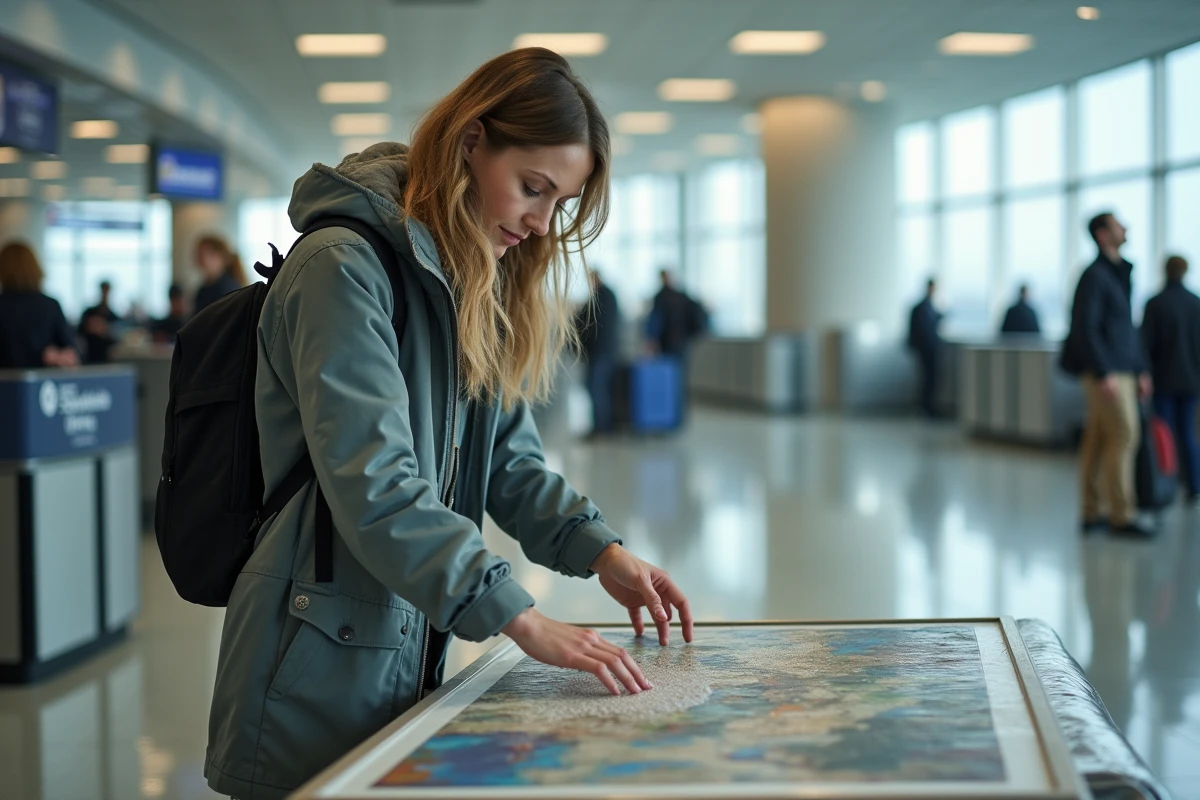
Some airlines refuse to accept original works in the hold, even when reinforced packaging is used, while others require specific dimensions for cabin transport. A prior customs declaration remains mandatory for any artwork leaving the territory, regardless of its value.
Specific protections, imposed by insurance or the airline, vary depending on the material of the frame and the support. Regulations evolve rapidly according to transit countries, making logistical preparation essential to avoid losses or damages.
What to know before traveling with a painting by plane
Transporting a painting from one country to another is not something to improvise. Each airline applies its own rules, sometimes stricter than those of galleries. Some accept works in the cabin, while others require checked baggage with a detailed declaration. In addition to size and weight, the destination and value of the artwork dictate the procedure to follow. For a flight departing from France, it is essential to gather precise information about customs formalities: mandatory passage through customs, forms to fill out, supporting documents to provide, and sometimes an ATA carnet for temporary export. If the canvas contains exotic wood, a specific check (CITES) may be added.
Insiders know: transporting a work of art requires anticipation and meticulousness. Whether an artist, collector, or intermediary, everyone must consider insurance, packaging, and gather all necessary documentation: invoice, certificate of authenticity, condition report. Depending on the value, it is often preferable to call upon a specialized carrier. For small works, La Poste or Colissimo may suffice, but as the stakes rise, traditional companies like Air France or low-cost carriers like EasyJet and Ryanair set clear, often restrictive limits. Before making any reservation, it is advisable to check the conditions specific to each carrier.
Before boarding, the question arises: how to transport a painting by plane? Behind this question lies a concrete reality: each flight, each destination, each work imposes its own requirements. The slightest oversight in formalities or preparation exposes one to unnecessary complications. Being informed about the airline’s guidelines, preparing the necessary documents, anticipating customs passage: this is the foundation for a transport without unpleasant surprises. A painting is never just a piece of luggage.
How to effectively pack and protect your artwork for air transport
The safety of the artwork depends on packaging designed to withstand the sometimes rough handling of air transport. Each artwork has its own protocol: an oil painting, a framed drawing, or a mounted photograph do not require exactly the same actions. Fragility, size, and whether or not there is a frame impose specific choices.
Here are the steps to follow to pack your painting before the flight:
- Start by covering the painted or photographic surface with a layer of silk paper or kraft paper. This first barrier prevents any direct contact and protects against scratches or transfers.
- Then apply several layers of bubble wrap, paying special attention to the corners, the areas most exposed to shocks.
- If it is a large format or going in the hold, place the artwork in a reinforced box or a suitable wooden crate. Inside, fill any empty spaces with polyethylene foam or crumpled paper to stabilize the contents and limit vibrations.
- For an unframed canvas that can be rolled, a shipping tube is the preferred solution. A flat, unframed work will fit into a thick padded envelope.
- Label each side of the package with the word fragile, clearly visible. This marking limits risks during handling.
- Before finalizing the packaging, check that the weight and dimensions meet the requirements of the chosen airline. Approximate preparation can compromise transport, both in the cabin and in the hold.
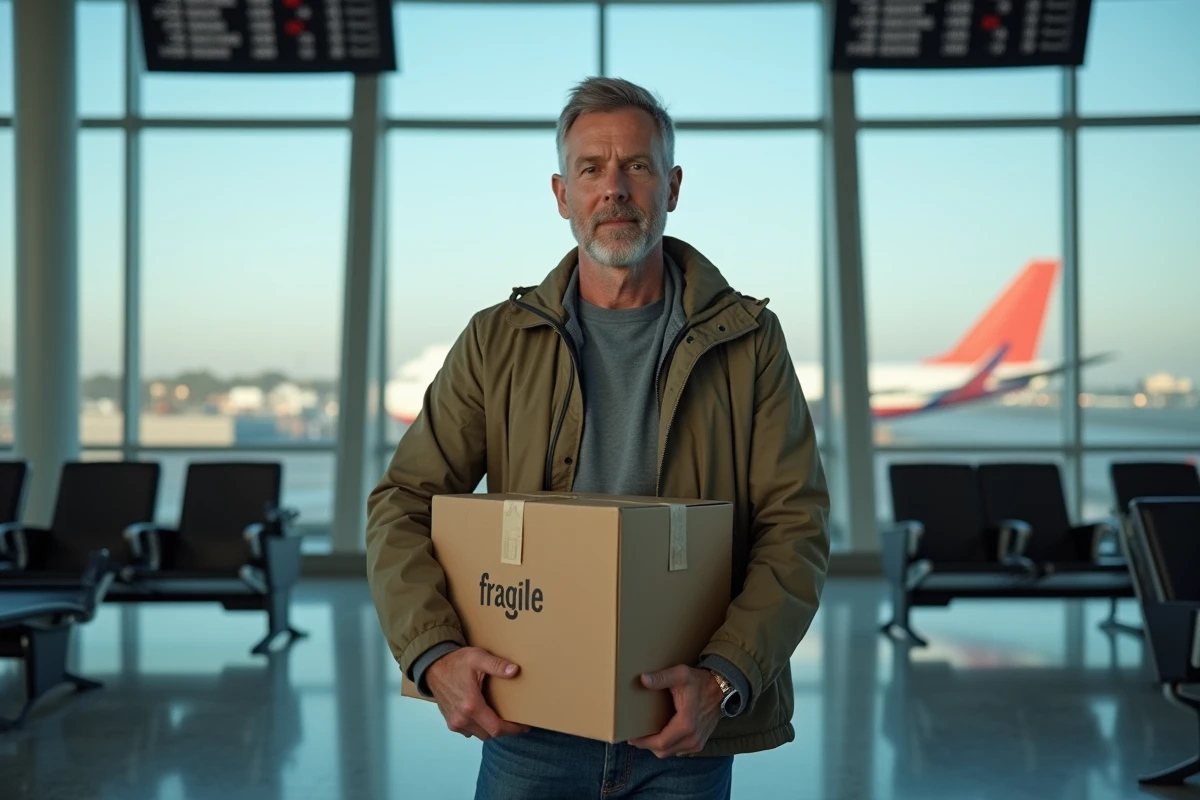
Expert tips and steps to follow to avoid unpleasant surprises
A rigorous organization makes a difference: every document, every detail counts. The certificate of authenticity, the invoice, and all supporting documents must travel with you, carefully stored in an easily accessible folder. These papers expedite customs checks and serve as a reference if a dispute arises during the journey. Before closing the package, take photos of all angles of the artwork: this condition report will protect you in case of damage or disputes upon arrival.
Consider taking out suitable insurance (ad valorem) that covers the risks of loss, breakage, or deterioration. Carefully read the clauses: the contract must explicitly mention air transport and handling. Some companies require handling by qualified personnel or storage in a climate-controlled area during layovers. Temperature and humidity fluctuations pose real threats to old or fragile works; it is better to prevent than to repair.
At check-in, inform the ground agent about the nature of the artwork and request that the baggage tag indicates fragile. In the case of international transport, prepare all customs documents in advance: form, ATA carnet if necessary for temporary export, CITES certificate for any piece containing regulated materials.
Upon arrival, inspect the packaging and the artwork without delay. If any damage appears, have a report drawn up by the carrier, photograph the situation, and immediately inform your insurer. Keep every document, every piece of evidence: this will make the difference if the situation escalates.
A painting crossing borders is never free from unexpected events, but flawless preparation transforms the travel ordeal into a mere formality. Anticipate, document, signal: three reflexes to ensure the artwork finds its place, intact, on the other side of the tarmac.