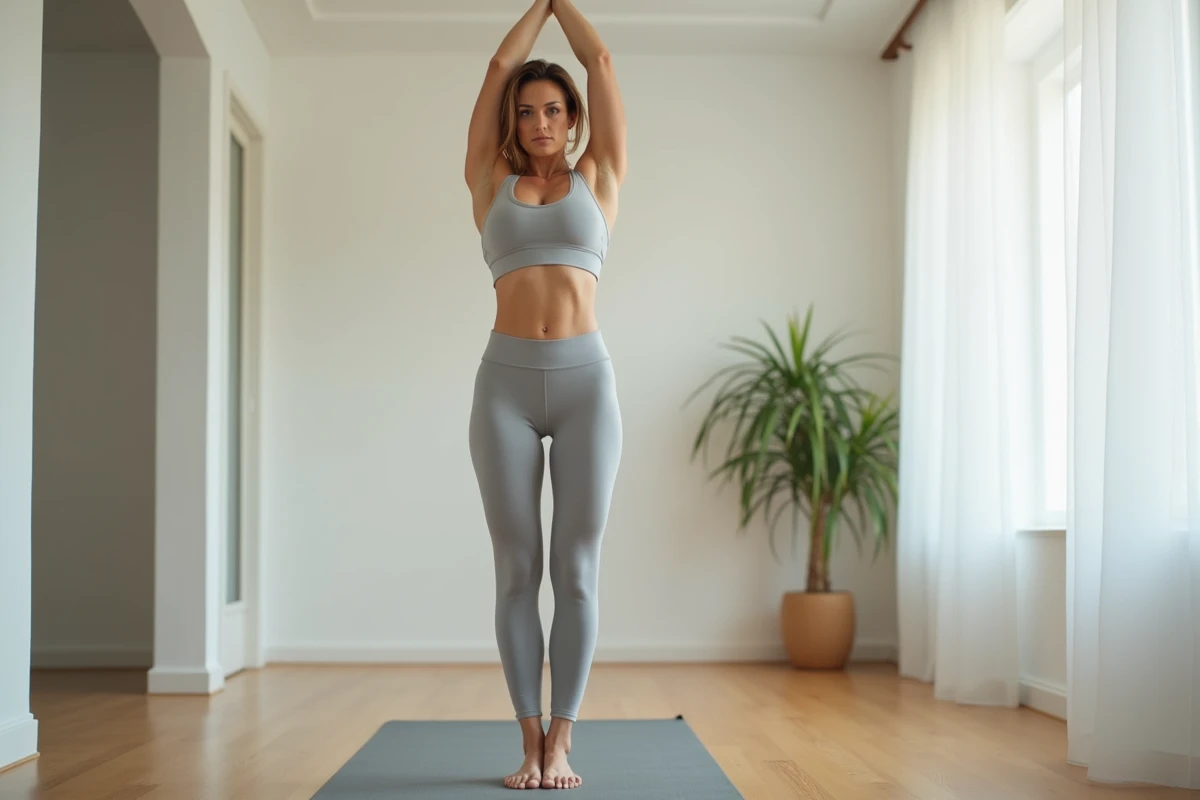
A woman who is 1.65m tall and weighs 62 kg, and another of the same weight with the same height can have radically different silhouettes. One stores fat in the abdominal area, while the other distributes her mass between muscles and hips. The BMI, in this case, shows the same number for both. Here we touch on the first limitation of an indicator that remains the starting point for any assessment of body composition.
Waist circumference and abdominal fat in women: what BMI does not capture
In practice, health professionals regularly observe female profiles classified as “normal weight” by BMI but exhibiting high abdominal fat. This discrepancy is not trivial. Recent recommendations emphasize that waist circumference better predicts cardio-metabolic risk than BMI alone, particularly in women.
Specifically, a woman with a BMI of 23 but a high waist circumference faces greater cardiovascular risks than a woman with the same BMI whose fat is distributed over her hips and thighs. The location of fat is as important as its quantity.
To go beyond the simple weight/height calculation, one can understand women’s body composition with Hub Santé by crossing several indicators. The combination of BMI, waist circumference, and metabolic assessment provides a much more reliable picture than an isolated number.

BMI and female silhouette: why the weight/height formula is not enough
The BMI formula (weight in kilograms divided by height in meters squared) was designed as a statistical tool for populations. The World Health Organization uses it to classify body composition into categories:
- Underweight: BMI less than 18.5
- Normal weight: BMI between 18.5 and 24.9
- Overweight: BMI between 25 and 29.9
- Obesity: BMI of 30 and above, with three classes of increasing severity
These thresholds are the same for men and women. This is where the problem lies. BMI does not distinguish between fat mass and muscle mass, nor the body distribution specific to each female morphology. A regular athlete with developed muscle mass may find herself classified as “overweight” according to the scale, even though her body composition is excellent.
The indicator remains useful as a first reference, but it says nothing about the quality of the silhouette or the actual state of health. Canadian guidelines for weight classification remind us: BMI is just one element of a comprehensive assessment, not a diagnosis in itself.
Muscle strengthening and body composition: the lever that weight does not show
More and more women are aiming for an “ideal BMI” by focusing on the scale. Recent research in exercise physiology points in another direction. At the same BMI, women who regularly engage in activities combining muscle strengthening and cardio (such as Pilates combined with HIIT, for example) show better fat distribution, a lower waist circumference, and a more harmonious posture than sedentary women.
This observation changes the perspective. Achieving a BMI between 18.5 and 24.9 does not guarantee a balanced silhouette. What makes the difference is the ratio between fat mass and lean mass, and how the body distributes these compartments.
What types of physical activity to prioritize
To influence body composition without solely focusing on weight, the combination of two practices yields the most visible results:
- Muscle strengthening (squats, planks, exercises with moderate weights) increases lean mass and alters the silhouette even without weight loss on the scale
- Regular cardiovascular work (brisk walking, running, cycling, swimming) reduces visceral fat, the fat that surrounds the organs and can be detected by waist circumference
- Mixed disciplines like Pilates or dynamic yoga improve posture, which changes the visual perception of the silhouette without altering weight
Losing fat and gaining muscle can leave BMI unchanged while transforming the silhouette. This is a point that approaches focused solely on BMI calculation overlook.
Aesthetic standards and ideal female weight: a changing framework
Recent sociological studies show a clear evolution in representations. In several Western countries, the female silhouettes deemed attractive have gradually become “more muscular”: more lean mass, less importance placed on total weight. This trend makes BMI even less relevant for defining what is called a “harmonious” silhouette.
In practice, this means that a woman aiming for a toned and proportionate body has every interest in tracking the evolution of her waist circumference and strength rather than her BMI. The scale and the weight/height calculation do not capture these transformations.
After pregnancy: a concrete case of the gap between BMI and bodily reality
The postpartum period perfectly illustrates the limitations of the BMI approach. After childbirth, weight may return to normal within a few months, but the distribution of tissues (skin, abdominal muscles, fat) remains altered. Surgeons and gynecologists recommend waiting at least six to twelve months before considering any aesthetic intervention such as a tummy tuck, allowing time for the tissues to stabilize.
During this phase, BMI may show a “normal” value without reflecting the actual state of the body. Again, crossing several parameters (waist circumference, muscle tone, health assessment) provides a much more accurate picture.
BMI remains an accessible entry point for assessing body composition, and no one should ignore it completely. But for a woman seeking a harmonious silhouette and real health benefits, the number on the scale divided by height squared only tells part of the story. Waist circumference, body composition, and regular physical activity complete the picture in a much more reliable way.